Salt or Freebase? Breaking Down the Chemistry That Changes Every Puff
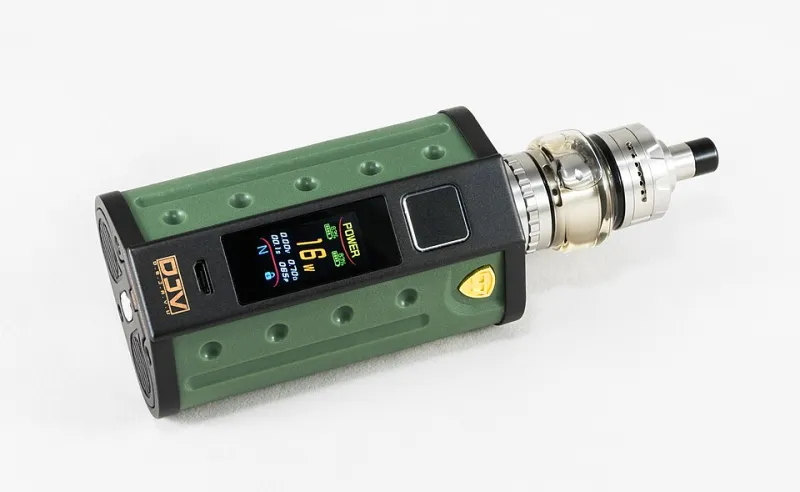
Photo: Jacek Halicki, CC BY-SA 4.0, via Wikimedia Commons
If you've ever picked up a pod system loaded with nic salt juice after spending time on a sub-ohm setup, you already know something is different. The hit lands differently. The satisfaction kicks in faster. The throat feel changes. But why? What's actually going on between those two bottles of liquid that makes the experience so distinct?
It's not marketing. It's chemistry — and once you get it, you'll make way smarter choices about what you're putting in your device.
Starting With the Basics: What Even Is Freebase Nicotine?
Freebase nicotine is the form that defined vaping for its first decade. When cigarette companies discovered in the 1960s that freebasing — removing the proton from nicotine's molecular structure — made the compound more bioavailable and faster-acting, it changed the tobacco industry. Early e-liquid manufacturers borrowed the same form when developing vape juice, which is why it became the default.
In its freebase state, nicotine is in a pure, unbound form with a higher pH level, which makes it more alkaline. That alkalinity is directly responsible for the throat hit you feel, especially at higher concentrations. At 12mg or above, freebase juice can feel genuinely harsh — which is actually why most sub-ohm vapers tend to run lower nicotine concentrations (3mg, 6mg) and compensate with high vapor volume.
Freebase absorbs into the bloodstream at a reasonable rate, but it's not instant. The experience tends to be more gradual compared to what salts deliver.
So What Are Nicotine Salts, Exactly?
Nicotine salts aren't a new invention — they're actually the natural form nicotine takes in a tobacco leaf. In leaf form, nicotine is already bound to organic acids, forming a salt compound. The issue is that in this natural state, the nicotine doesn't absorb efficiently into the body.
The breakthrough came from Pax Labs (the company behind Juul) around 2015, when their researchers figured out that adding benzoic acid to the salt compound did two important things simultaneously: it lowered the pH of the liquid (making it smoother at high concentrations) and it improved the rate of absorption dramatically. The result was an e-liquid that could carry 25mg, 35mg, or even 50mg of nicotine without feeling like you were inhaling sandpaper — and that hit the bloodstream almost as fast as a cigarette.
That speed and smoothness is why nic salts became the foundation of the pod system era. Devices like the Juul, Vaporesso XROS, and countless others were designed specifically around salt-based juice.
The Throat Hit Difference: Why It Matters
This is where things get personal. Throat hit — that slight sensation at the back of your throat when you inhale — is something vapers have strong opinions about. Some love it. Some hate it. And the nicotine form plays a huge role in how pronounced it is.
Freebase at higher concentrations delivers a noticeable, sometimes sharp throat sensation. For ex-smokers transitioning to vaping, that sensation can actually feel reassuring — it mimics the physical feedback of a cigarette. But for vapers who've been at it a while, or those who prefer smoother draws, it can feel like too much.
Nic salts, thanks to the lowered pH from benzoic acid, are dramatically smoother even at concentrations that would be genuinely unpleasant in freebase form. You can vape 50mg salt juice without a harsh hit, which is part of why high-nicotine pod systems became so popular with smokers looking to quit. The smoothness makes high-dose nicotine delivery feel accessible rather than punishing.
Device Compatibility: This Part Is Non-Negotiable
Here's where a lot of newer vapers get tripped up, and it's worth being direct about: nicotine salts and freebase nicotine are not interchangeable across all devices.
Nic salts are designed for low-wattage, high-resistance devices — mouth-to-lung (MTL) pod systems and starter kits that operate in the 10-20 watt range with coils above 1.0 ohm. These devices produce relatively modest vapor and are designed to work with high-concentration liquids.
If you drop a 50mg nic salt into a high-powered sub-ohm tank running at 80 watts with a 0.2 ohm coil, you're going to consume a dangerous amount of nicotine very quickly. The massive vapor production amplifies the delivery to a level that can cause dizziness, nausea, and nicotine overconsumption. It's not a good time.
Freebase, on the other hand, works well in both low and high-wattage setups, but it really shines in direct-lung (DL) sub-ohm devices where the high vapor volume compensates for lower nicotine concentrations. A cloud-chasing setup at 3mg freebase can still deliver satisfying nicotine because of sheer volume.
Quick compatibility guide:
- Pod system / MTL device → Nicotine salts (25–50mg) or low-concentration freebase (3–12mg)
- Sub-ohm / DL device → Freebase only (3–6mg recommended)
Choosing Based on Where You Are in Your Vaping Journey
Your ideal nicotine form also depends a lot on your history and goals.
Recent smokers or those using vaping to quit cigarettes tend to do better with nic salts in a pod system. The faster absorption curve more closely mimics the nicotine delivery pattern of cigarettes, which helps manage cravings. The smoothness at high concentrations means you're not fighting the device to get what you need.
Established vapers who've already stepped down their nicotine often prefer freebase because they're running lower concentrations anyway and enjoy the flavor expression that freebase juice tends to offer. Many premium e-liquid lines — especially complex dessert and fruit profiles — are formulated in freebase because the flavor compounds interact differently.
Cloud enthusiasts and hobbyist vapers almost exclusively use freebase. Sub-ohm hardware demands it, and at 3mg, the slower absorption is a non-issue when you're taking long, voluminous draws.
The Bottom Line
Neither salt nor freebase is objectively better — they're tools optimized for different setups and different goals. Understanding the chemistry behind each one means you're making a real choice rather than just grabbing whatever's on the shelf.
Nic salts: fast-acting, smooth, high-concentration, designed for low-wattage devices. Freebase: versatile, flavor-forward, slower delivery, ideal for sub-ohm setups.
Know your device. Know your tolerance. Know what you want from the experience. That's how you stop guessing and start actually dialing in your vape.